COLD BORE
Arken Optics EPL-4 4-16x44 FFP Rifle Scope
Arken Optics EPL-4 4-16x44 FFP Rifle Scope
Couldn't load pickup availability
Arken Optics EPL-4 4-16x44 FFP Rifle Scope
The Arken EPL-4 4-16x44 FFP is probably one of the more interesting Arken scopes for us because it addresses one of the things we don't talk about enough with precision optics:
Eventually, you have to carry the rifle.
A big 5-25x56 or 7-35x56 scope makes plenty of sense on a dedicated precision rifle. Put that same kind of optic on a hunting rifle you're carrying several miles through the mountains and all that capability starts coming with a pretty obvious cost.
The EPL-4 takes a different approach.
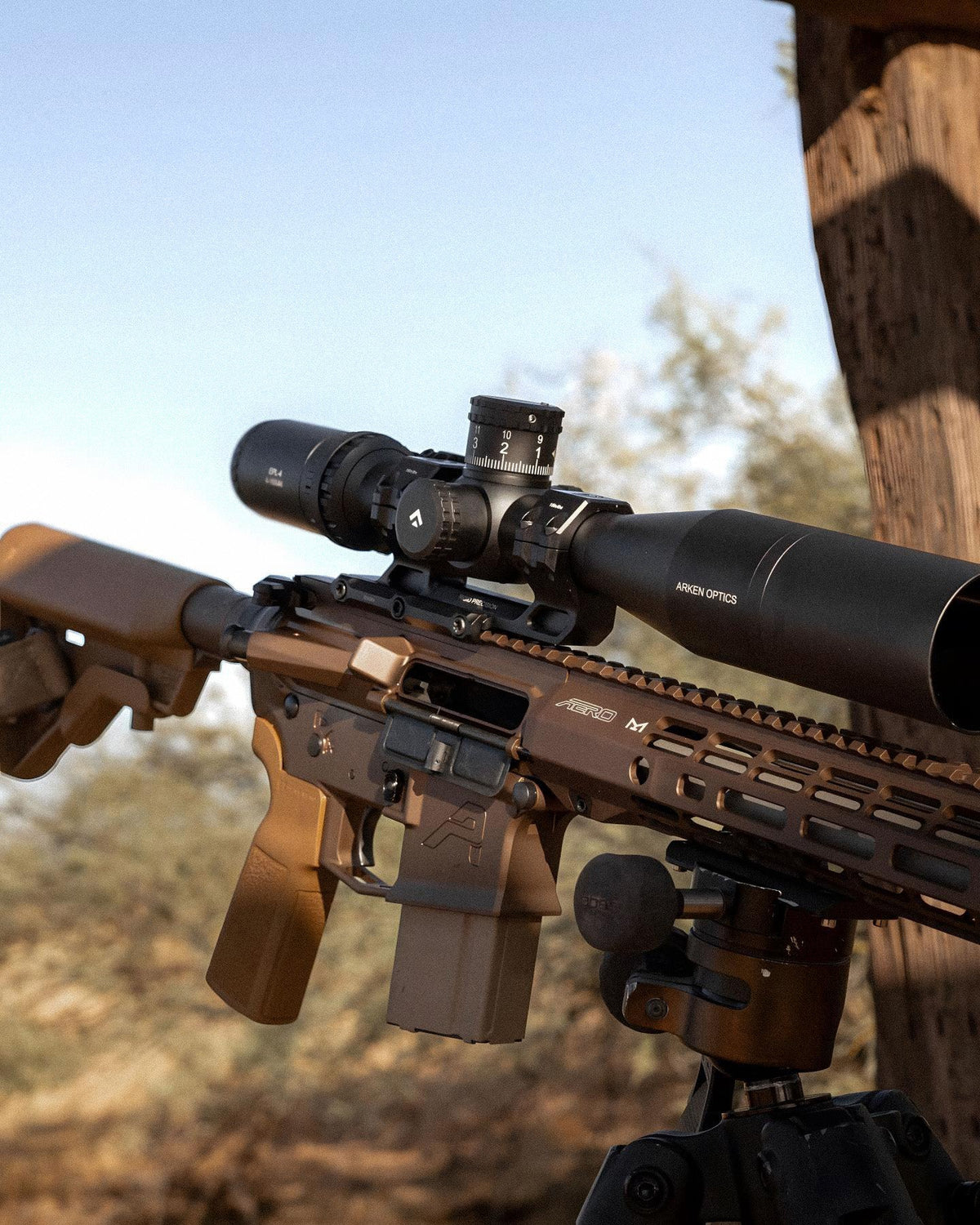
At 24.1 ounces, with a 30mm tube and 44mm objective, it's considerably more manageable than the larger precision-oriented scopes while still giving you a first focal plane reticle, exposed elevation turret, capped windage, zero stop, illumination, and side parallax adjustment.
That's a combination we like for a practical hunting rifle.
4-16x Is a Pretty Useful Place to Be
It's easy to look at 16x and think you're giving something up compared with a 5-25x or 7-35x scope.
Technically, you are.
The question is whether you needed that additional magnification in the first place.
For most hunting distances, 4-16x gives you quite a bit to work with. Four power provides a 30-foot field of view at 100 yards, which is useful when the shot is closer or you need to find an animal quickly. At the other end, 16x gives you plenty of magnification for more deliberate shots at distance.
And you don't have to use all 16x just because it's there.
Most of the time we'd keep the scope at a relatively low magnification while moving or waiting for an opportunity. You can always add magnification once the situation gives you the time and stability to use it.
That tends to work better than discovering you've left your scope at maximum power when an animal appears much closer than expected.
The FFP Reticle Makes Sense Here
The EPL-4 is a first focal plane scope, meaning the reticle changes apparent size as you change magnification. More importantly, its subtensions remain valid throughout the magnification range.
If you need to hold for elevation or wind, the references mean the same thing whether you're at 8x, 12x, or 16x.
That's useful on a field rifle because the conditions—not the scope—should determine how much magnification you're using.
The illuminated reticle is also there when conditions make it useful. We wouldn't leave illumination turned on just because the scope has it, but against dark timber or during the lower-light portions of a hunt, being able to illuminate the aiming reference can help keep it visible.
Use it when it helps. Leave it off when it doesn't.
VHR or VPR?
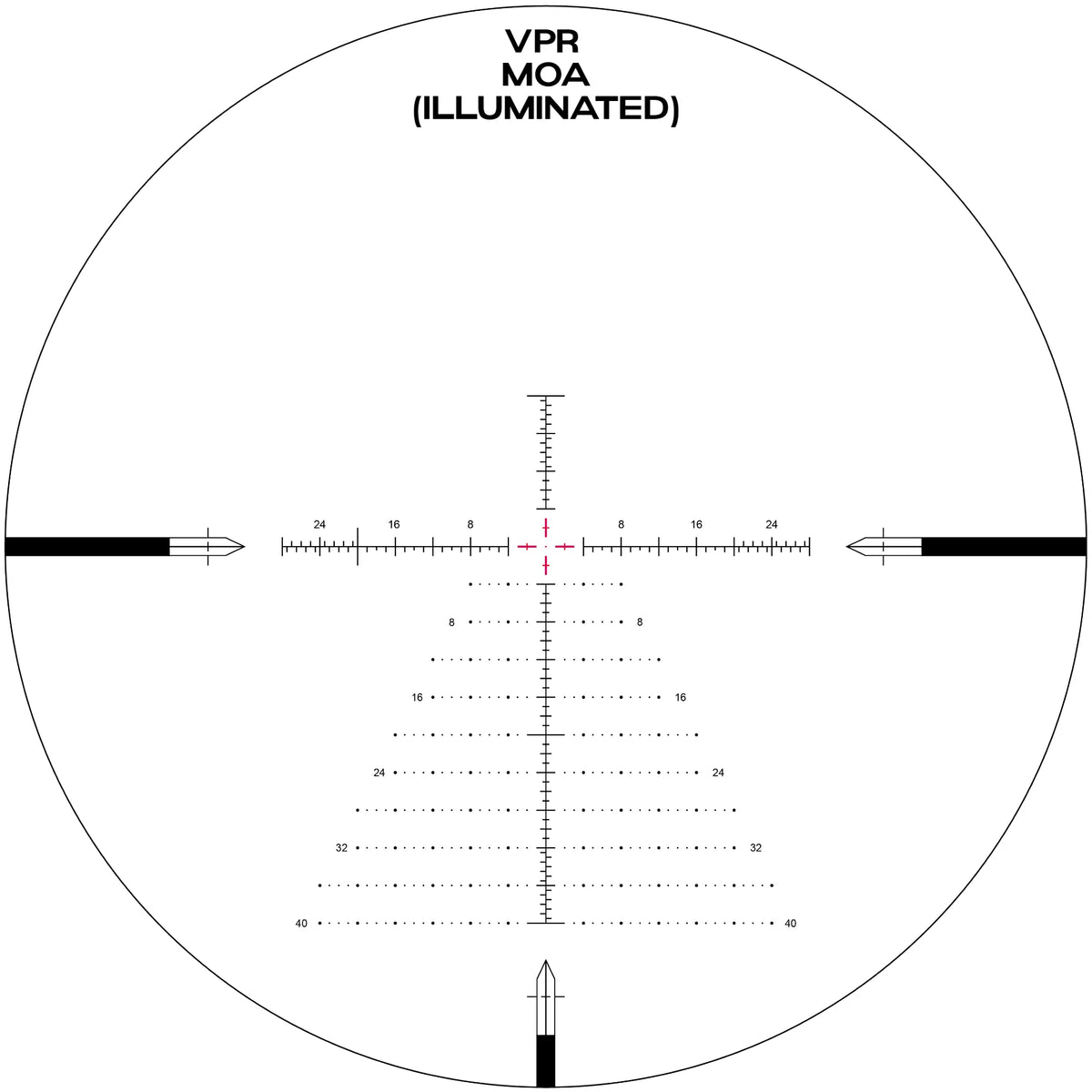
Arken offers the EPL-4 with VHR and VPR reticles in both MIL and MOA, and this is one of those choices where more information isn't automatically better.
For a hunting-focused rifle, we'd give the VHR a serious look. It provides a simpler sight picture intended to make finding the aiming point straightforward while still giving you useful references.
The VPR provides a more complete system for holds, wind calls, and corrections. If this rifle is going to spend substantial time shooting steel, training at distance, or doing double duty as both a hunting and precision rifle, the additional references may be worth having.
Pick the reticle you'll actually learn and use.
A simpler reticle you understand is considerably more useful than a sophisticated one you haven't taken the time to learn.
The Turret Setup Makes Sense for a Field Rifle
One detail we particularly like is the combination of an exposed elevation turret and capped windage turret.
For a lot of hunting applications, that's a sensible arrangement.
Elevation is something you may intentionally dial when distance requires it. Wind is much more commonly held in the reticle. Keeping the windage turret capped helps protect it from being unintentionally moved while the rifle is riding in a pack, scabbard, truck, or getting carried through brush.
The elevation turret uses Arken's AZS Zero Stop, giving you a mechanical reference for returning to your established zero after you've dialed.
It's not a glamorous feature.
It just makes it harder to get lost on the turret when you're trying to keep track of more important things.
We like equipment that works that way.
10-Yard Parallax Is More Useful Than You Might Think
The EPL-4 adjusts parallax from 10 yards to infinity.
That's considerably closer than most centerfire hunting applications require, but it makes the scope much more versatile.
Put it on a precision rimfire, trainer, or rifle that gets used at both short and extended distances and that adjustment range starts earning its keep.
It's another reason we see the EPL-4 as more than strictly a hunting scope.
What Are You Giving Up?
The EPL-4 isn't an EP-5 that somehow lost a pound without sacrificing anything.
You get 4-16x magnification, 20 MIL/68 MOA of elevation adjustment, a 44mm objective, and a 30mm tube. If you're building a dedicated long-range rifle and regularly working at extended distances, more magnification and adjustment range may genuinely be useful.
That's where we'd start looking at Arken's larger precision scopes.
But if the rifle has to work in the field, there's another side to that calculation.
The EPL-4 weighs 24.1 ounces.
Arken's EP-5 GENII 5-25x56 weighs 41.2 ounces.
That's a difference of more than a pound sitting on top of the rifle.
Whether that pound matters depends entirely on what you're doing. On a rifle sitting on a bench, probably not much. On a rifle carried all day through steep country, we'd rather have a good reason for carrying it.
That's where the EPL-4 starts making sense.
What Do We Think?
We see the Arken EPL-4 4-16x44 FFP as a good fit for someone who wants some of the capability of a precision optic without turning a practical hunting rifle into a dedicated long-range rig.
The 4-16x range is useful. The FFP reticle gives you legitimate hold capability. You can dial elevation when the situation calls for it, return to zero with the mechanical stop, and keep the windage protected while you're moving through the field.
And at 24.1 ounces, the whole package remains reasonable to carry.
There's enough capability here to reach farther when the rifle, conditions, and shooter support it.
But the scope doesn't make the decision for you.
Know your rifle. Establish a solid zero. Learn your reticle. Verify your data at distance. And understand what you can actually do from realistic field positions—not just what the ballistic calculator says should be possible.
Then, when an opportunity presents itself, there's less to figure out.
That's what preparedness should look like.
Specifications
Magnification: 4-16x
Objective: 44mm
Focal Plane: First Focal Plane (FFP)
Tube Diameter: 30mm
Glass: Japanese Extra-Low Dispersion (J-ED)
Eye Relief: 3.6 in.
Field of View: 30-7.5 ft. @ 100 yd.
Reticle Options: VHR-MIL / VHR-MOA / VPR-MIL / VPR-MOA
Turret Adjustment: 0.1 MIL / 0.25 MOA
Elevation Per Revolution: 8 MIL / 20 MOA
Windage Per Revolution: 6 MIL / 15 MOA
Elevation Adjustment Range: 20 MIL / 68 MOA
Windage Adjustment Range: 12 MIL / 41 MOA
Parallax: 10 yd. to infinity
Zero Stop: Arken AZS Zero Stop
Zero Reset: Yes
Windage: Capped, tool-less turret
Illumination: Red
Length: 13.2 in.
Weight: 24.1 oz.
Battery: CR2032
What's Included
EPL-4 4-16x44 FFP scope, CR2032 battery, tethered lens cover, sunshade, turret cap, battery cap tool, T8 Torx wrench, lens cleaning cloth, user manual, and Arken stickers.
Share